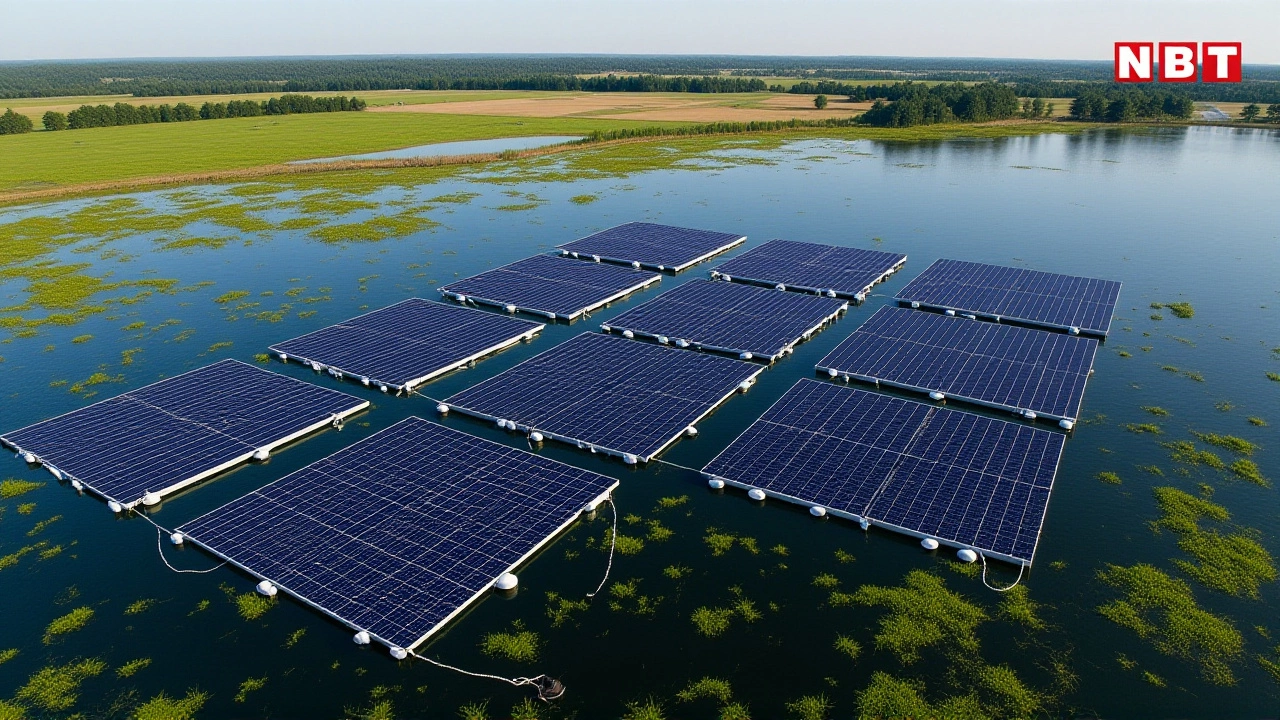
When Government of NCT of Delhi announced its latest green energy initiative last week, it wasn't about rooftop panels or wind turbines. Instead, the city is looking downward—literally. The plan? To float solar panels on ponds and lakes across the capital, starting with a pilot project at the Bawana Power Plant. It’s a bold move that aims to generate clean electricity while simultaneously tackling one of India’s most pressing issues: water scarcity.
The twist is that this isn’t just an experiment; it’s a strategic pivot. While states like Telangana and Andhra Pradesh have already embraced floating solar farms, Delhi is playing catch-up. But here’s why it matters for you: this technology doesn’t just produce power. It saves water. By covering pond surfaces with solar arrays, the city hopes to reduce evaporation rates significantly—a double win in a region where every drop counts.
A Pilot Project with Big Ambitions
The initial rollout will take place at the Bawana Power Plant campus, specifically targeting two artificial ponds spread across approximately 4 acres. These aren’t natural bodies of water but rather reservoirs filled with treated sewage effluent from a nearby plant in Rohini. This wastewater, previously used for cooling condensers in the power station, now serves as the foundation for Delhi’s first floating solar farm.
Officials estimate the installation could generate between 2 and 3 megawatts (MW) of electricity. That might not sound like much compared to massive national projects, but consider this: those few megawatts can power thousands of homes annually without burning fossil fuels. More importantly, the cost tag sits around ₹5–6 crore ($600,000–$720,000), making it relatively affordable for such innovative infrastructure.
"This is more than just generating power," said Rekha Sarkar, a journalist covering the story. "It’s about conserving resources we’re running out of fast." Her point underscores the broader implications of what seems like a small-scale trial.
Why Floating Solar Works Better Here
Floating solar systems offer unique advantages over traditional land-based installations. For starters, they don’t require valuable real estate—an issue in densely populated cities like Delhi. Secondly, being submerged partially underwater keeps the panels cooler, boosting their efficiency by up to 10%. Think of it like keeping your laptop away from direct sunlight—it performs better when it stays cool.
But perhaps the biggest benefit lies in water conservation. When solar panels cover large sections of a pond’s surface, they act as shade, reducing evaporation caused by intense summer heat. According to experts cited in reports, this simple mechanism helps preserve precious freshwater supplies during dry seasons.
Interestingly enough, similar setups elsewhere have shown remarkable results. In Ramagundam, Telangana, the National Thermal Power Corporation (NTPC) operates India’s largest floating solar plant so far, boasting a capacity of 100 MW. Meanwhile, Madhya Pradesh plans to install another facility capable of producing 1,000 MW. Even bigger ambitions loom ahead: NHPC intends to deploy 2,850 MW worth of floating solar capacity across multiple states including Jharkhand, Odisha, and Telangana.
National Context and Future Plans
Delhi’s efforts align perfectly with India’s overarching goal to expand renewable energy sources. Back in November 2021, analysts noted how various public sector undertakings—including ONGC, BHEL, and SECI—were investing heavily in floating solar technologies. One standout figure comes from TERI, which estimated that installing floating solar plants across 1,800 square kilometers of Indian waters could add nearly 280 GW of additional capacity nationwide.
To put that number into perspective, imagine powering entire metropolitan areas solely through these floating arrays. With over 5,264 dams already built and hundreds under construction, there’s plenty of potential space available for expansion. Yet challenges remain. Some studies warn about possible ecological impacts, such as changes in water quality or disruptions to aquatic life. Experts urge caution alongside progress, emphasizing the need for further research before scaling up operations too quickly.
What Comes Next?
If successful, the Bawana project will pave the way for larger deployments across other parts of Delhi. Imagine seeing shimmering fields of solar panels gliding gently atop Yamuna River tributaries or local parks’ ornamental lakes. Such visuals may soon become commonplace if policymakers follow through on current proposals.
For now, all eyes are on whether the tender process moves forward smoothly. Once contracts are awarded, construction should begin shortly thereafter. Assuming no major hurdles arise along the way, residents might witness tangible benefits within months—not years—as promised by officials eager to showcase Delhi’s commitment toward sustainability.
Frequently Asked Questions
How does floating solar help conserve water?
Floating solar panels create shade over ponds and lakes, significantly reducing evaporation rates. During hot summers, uncovered water bodies lose substantial amounts due to high temperatures. Covering them minimizes exposure to sunlight, preserving moisture levels essential for both industrial use and environmental balance.
Who is responsible for implementing the Bawana project?
The Department of Energy under the Government of NCT of Delhi oversees implementation. They selected Bawana Power Plant because its existing infrastructure supports integration seamlessly. Treated wastewater from Rohini feeds directly into the ponds, ensuring sustainable usage throughout the lifecycle.
Are there any risks associated with floating solar farms?
While generally safe, some concerns exist regarding long-term effects on aquatic ecosystems. Changes in light penetration and temperature regulation could affect fish populations and plant growth patterns. Researchers recommend monitoring closely during early stages to mitigate unforeseen consequences effectively.
What makes floating solar different from regular rooftop installations?
Unlike rooftops limited by structural constraints, floating systems utilize unused water surfaces efficiently. Additionally, cooler operating conditions enhance performance metrics substantially. Plus, since no new land needs clearing, ecological footprints decrease considerably compared to conventional methods requiring extensive ground preparation.
Will this model be replicated elsewhere in India?
Absolutely! States like Telangana, Madhya Pradesh, and others have demonstrated success already. Central agencies like NTPC, NHPC, and SECI actively promote adoption nationwide. Given favorable policies supporting renewables, expect widespread replication once proven viable economically and environmentally.